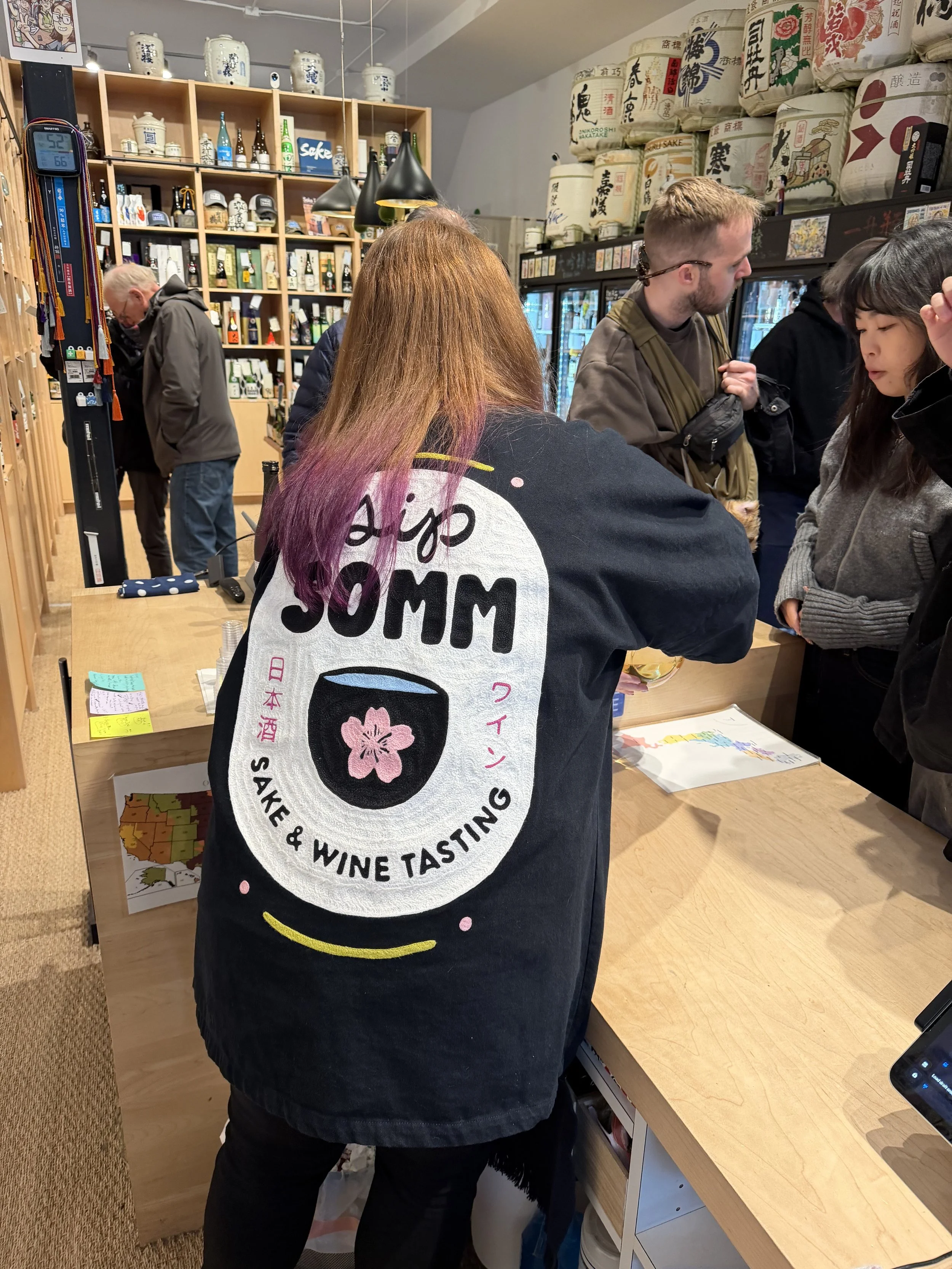
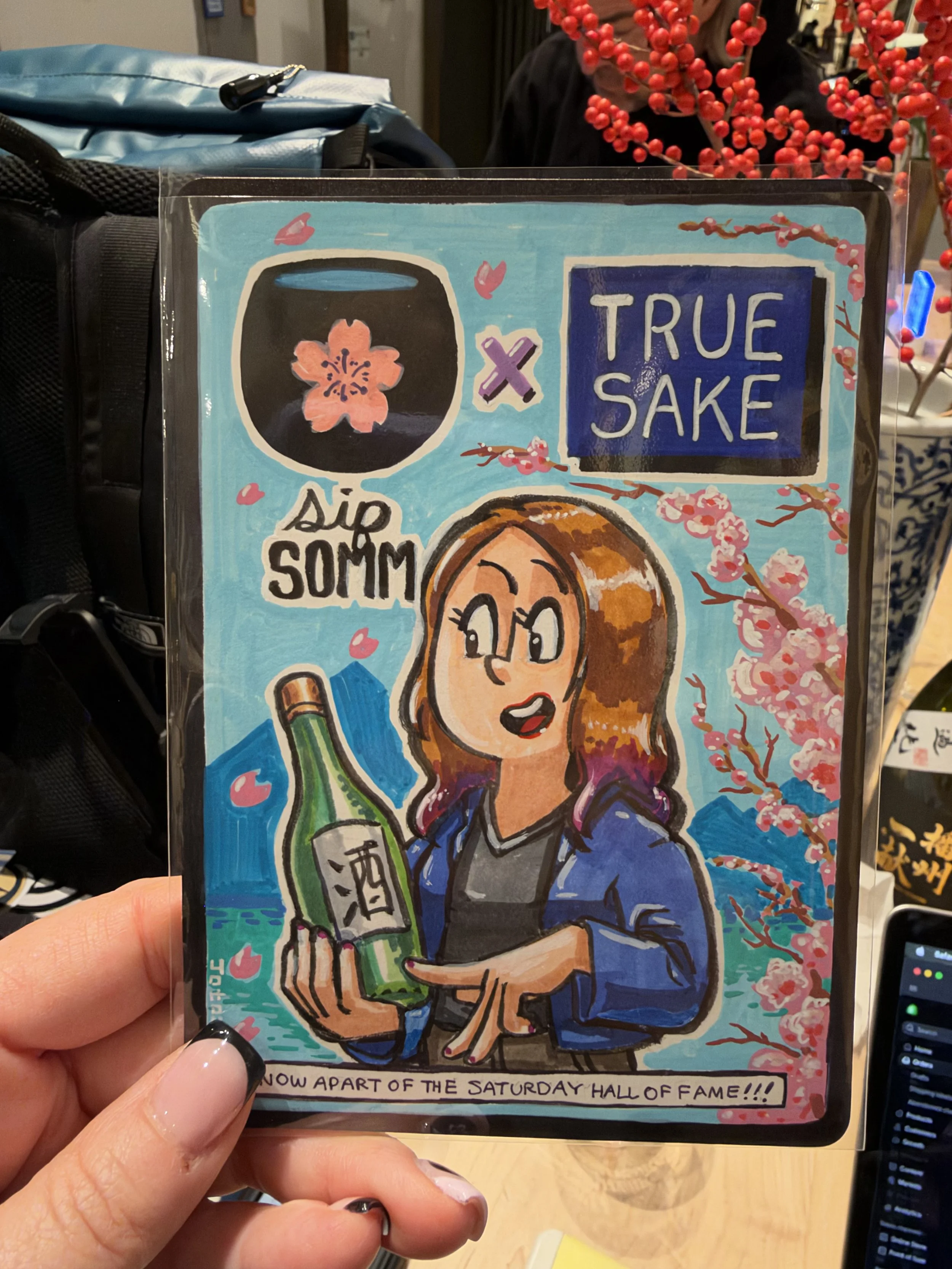
Sip Somm Sake & Wine Tasting officially transitioned from a YouTube channel into a private events business in early 2023, and this year I finally brought the brand to the public. I kicked off my promotional tour at my alma mater, True Sake! With the holiday season approaching, I made sure to jump on their Saturday tasting schedule before the seasonal rush begins. Despite the Bay Area's recent rain and flooding, I lucked out with a bright, sunny afternoon. Although foot traffic started out slow, the shop quickly packed out thanks to my tasting, True Sake’s mega isshobin sale (20% off), and the upcoming Thanksgiving holiday.
I was a little worried about condensing a 1.5-hour tasting experience into five-minute flight spiels while still giving guests a complete experience where they can taste through, learn a thing or two, and get inspired. My theme for this flight was “sake that drinks like wine.” The three bottles I chose can do everything wine can at the dinner table, and often better, thanks to sake’s higher amino acid content and lower overall acidity. In fact, sake has about 1/5th the acidity of your average wine. Because rice lacks the tartaric acid naturally found in grapes, sake is instead driven by lactic, malic, succinic, and amino acids, giving it a rounder, more umami-driven structure for food pairing.
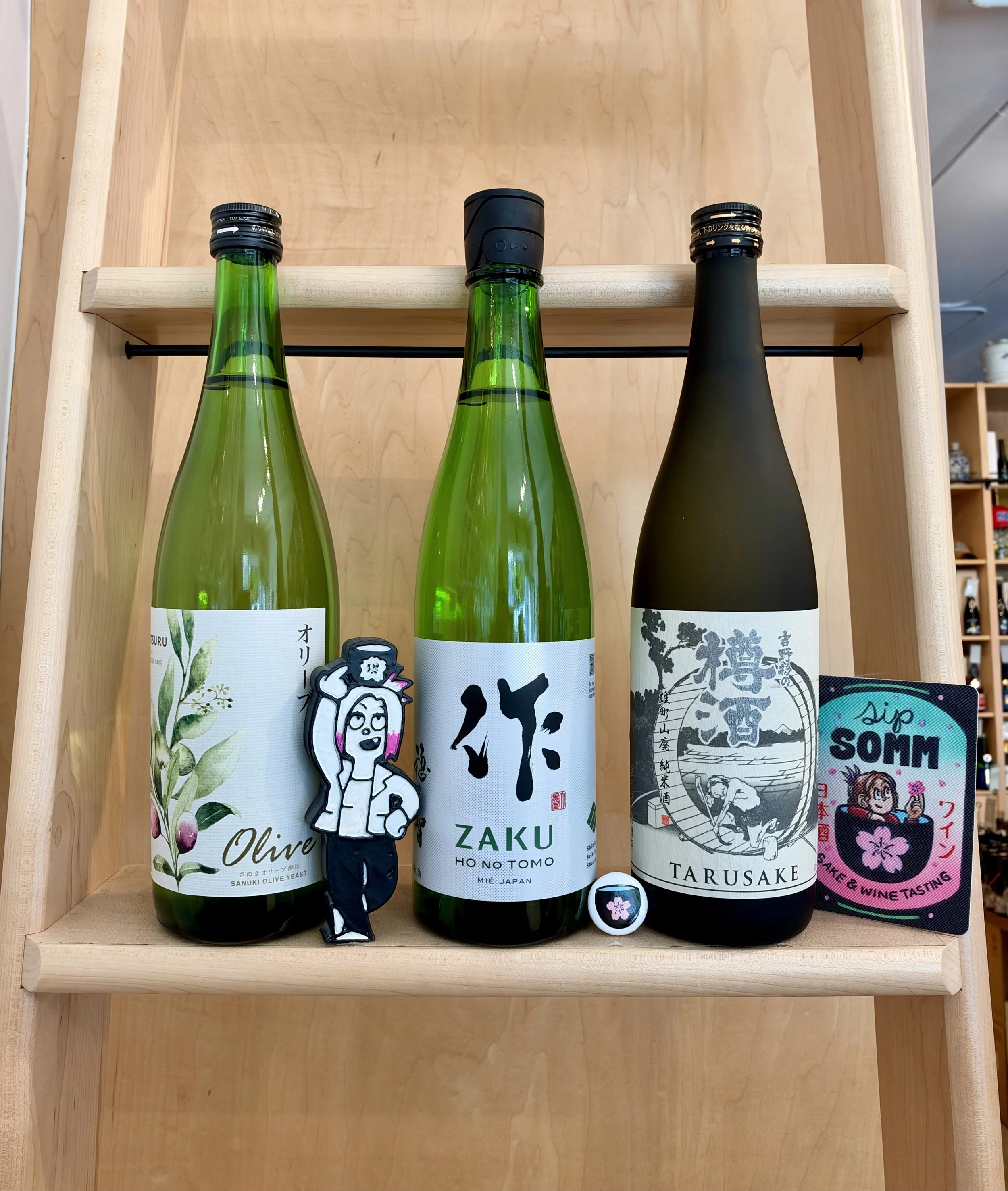
Sake Lineup
Kawatsuru Olive Junmai Ginjo - Very light on its feet and elegant, with crisp notes of green apple, citrus and some minerality. Close your eyes and you are drinking coastal white wine from Liguria.
Zaku Ho no Tomo Junmai - Modern style, fresh and vibrant with a touch of effervescence, a multitude of berry notes, both dried and fresh including bramble, blueberries and raspberry fruit leather. There’s a hint of vanilla bean too. It reminds me of a Spanish Garnacha or Sciaccarellu from Corsica.
Choryo Yamahai Taruzake - This Omachi-based sake initially expressed bright cedar tones at fridge temp, then settled into its powerful umami essence at room temp when decanted. It played the role of red Bordeaux or 100% Cabernet Sauvignon from California with the cypress notes mimicking pyrazine or green bell pepper, and providing a wood essence that plays the role of soothing barrel age. The surprising thing about its expression when decanted is that it started to get very chicken broth savory-like, along with some emerging salinity… going from red wine territory to Manzanilla sherry. The pairing effect only got better as the temperature rose.
Umami Snacks
Dried Oyster and Shiitake Mushrooms (Unseasoned): I sourced these straight from Berkeley Bowl, the greatest supermarket in the country.
Sun-Dried Tomatoes: Little sliced Roma tomatoes picked up from good ol’ Trader Joe's.
Parmesan Crisps: Made by Joyfull Bakery, these were so popular that multiple customers tried to buy my backup packs. They’re extra crispy and slightly thick, finished with a generous hit of sea salt that brings out the ultimate cheesy flavor.
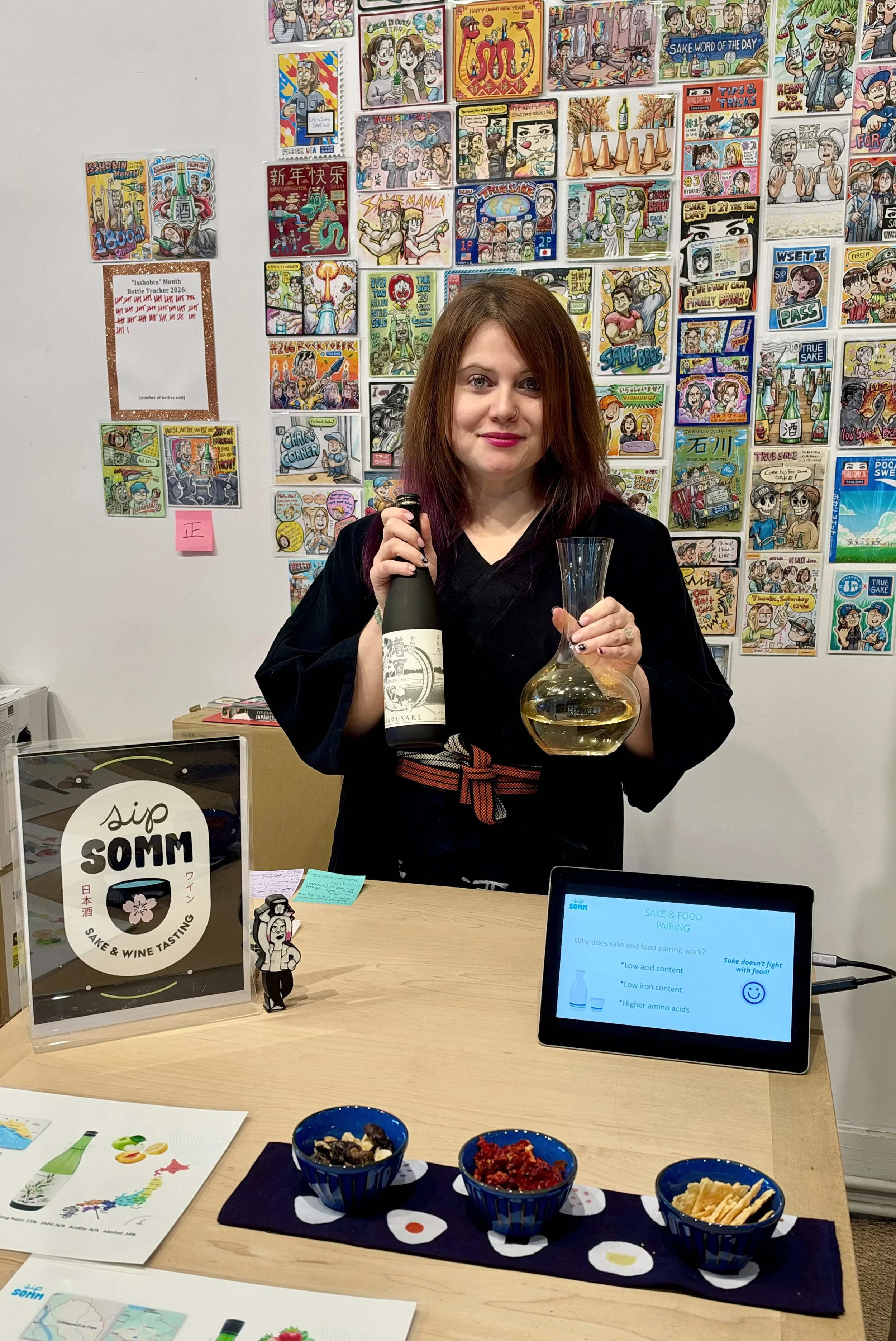
The Pros on Point -
I am lucky to be surrounded by such well-honed professionals. I took that to my advantage and asked bossman Beau-san and my colleague Akemi to taste through all three umami snacks with the three sake I was featuring ahead of time. The ritual reminded me of a san-san-kudo ceremony, only tailored for food pairing. We were hoping to find unity and an unyielding bond between at least one of the snacks and sake through this process!
Beau’s favorites - Sun-dried tomato was the winner with both Kawatsuru Olive & Zaku Ho no Tomo. The Choryo Taru was most vibrant with the parmesan crisps.
Akemi’s favorites - The Kawatsuru Olive with sun-dried tomato. Great acidity and brightness. The Ho no Tomo did well with the parmesan crisps which were salty and enhanced the sake’s fruitiness. Choryo was best with the mushroom, combining savory elements together.
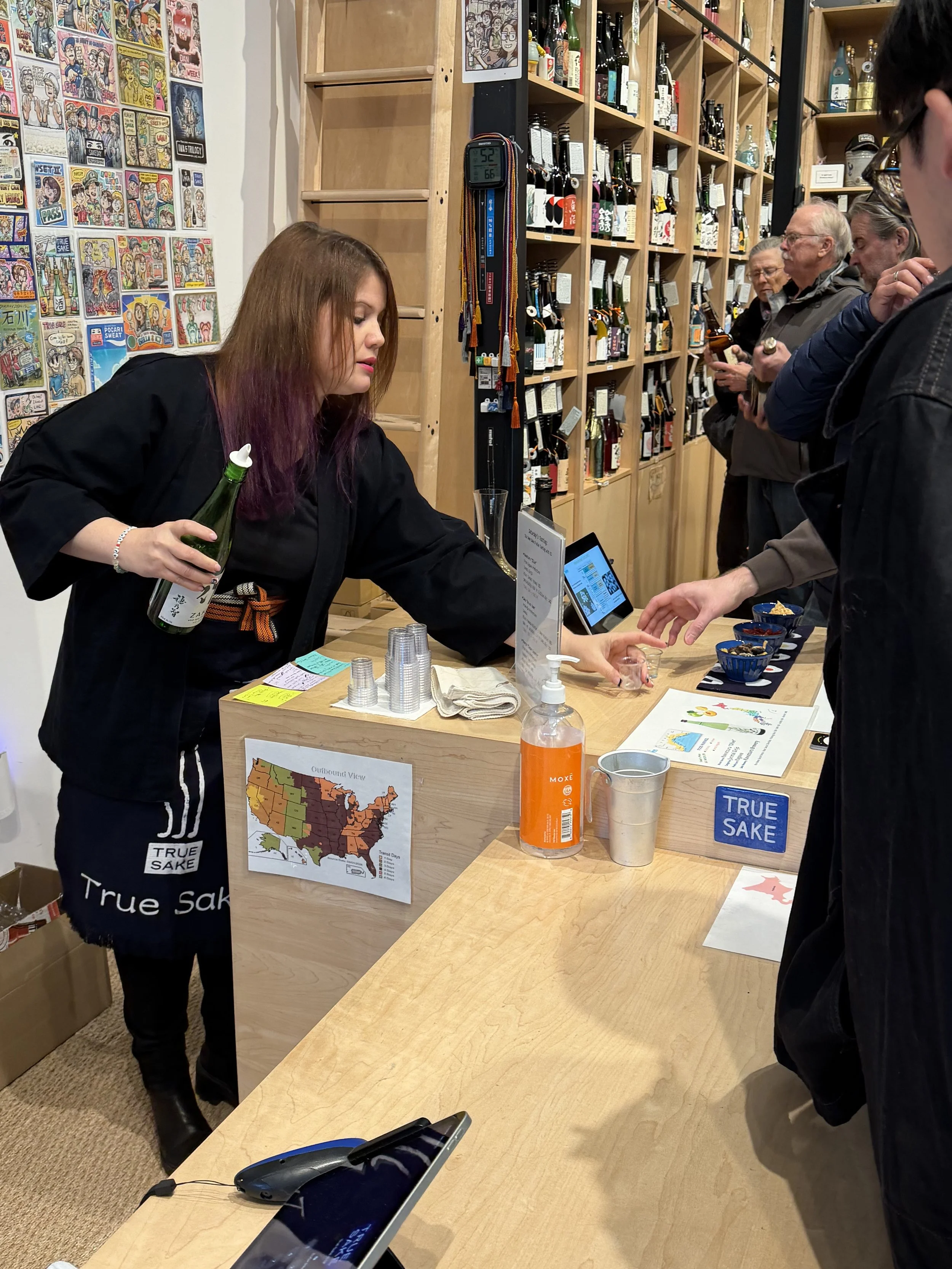
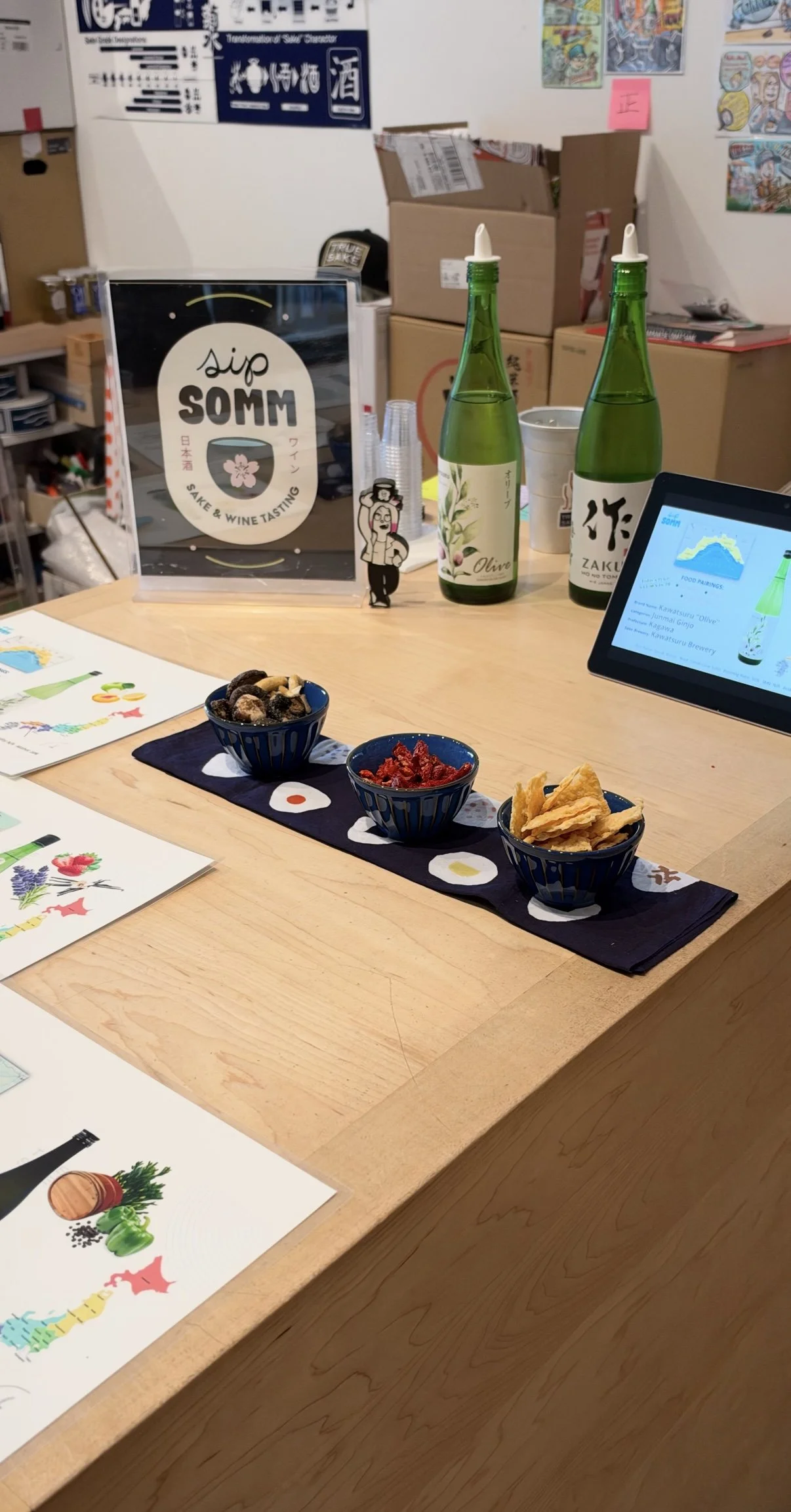
What I noticed was that the Kawatsuru was great with the sun-dried tomato, but also worked with the oyster mushroom. The tomato pairing created a brighter effect, while the oyster mushroom brought the sake down to the earth with an almost pasta water essence. Ho no Tomo was also nice with the tomato. It showcased Ho no Tomo’s pretty aromatics and made the acid a bit more vibrant. What was almost a revelation and completely unexpected was the oyster mushroom pairing PERFECTLY. Both sake and mushroom disappeared, and all that was left was a wide exclamation of berry flavor. The mushroom turned up the volume on Ho no Tomo’s basket of berry notes and made it even better. A customer made a good observation and said that Ho no Tomo was not only fruity, but had a subtle savoriness. This makes sense, considering its status as a Junmai rather than a Ginjo. I think the underlying savoriness of this sake matched the delicate oyster mushroom, cancelling each other out and only leaving the sake’s bounty of berry goodness.
As for the Choryo Yamahai Taruzake, I felt the sake overwhelmed the oyster mushroom, yet it paired exceptionally well with the deeper and richer shiitake. Cocoa powder notes emerged and it was highly complimentary.
What most people were stoked about was how well all three umami options worked with every sake, ranging from a fresh white wine to a hefty red/sherry style. The tasting proved that regardless of the style, sake pairs with food much more easily than wine and carries far less risk of a major pairing faux pas. That versatility matters when high-pressure hosting situations roll around. If you’re the friend or family member putting your hard-earned reputation as the group's wine buyer on the line, you can rest easy with sake, knowing disaster won't strike at the holiday dinner table. Remember, SAKE DOESN’T FIGHT WITH FOOD!
Calling all Cuties -
I am very proud of my logo design, but over time I have noticed that while it attracts many people’s eyes, it is the most alluring to children… usually short ones at that. This phenomenon could easily be because children are bored in the store, looking for free goodies on the counter and my swag sits right at their eye level. But even so, the day after the tasting I added a few of my logo pins and stickers near my business cards and more than four children took them home within 2 hours!
Now, I’m not aiming to be the Joe Camel of the sake industry, but cute graphics are everywhere in Japan, and they suit everyone, young and old! From safety signs to toilet instructions and even CEO business cards with caricatures, cute culture is king in Japan. Having a cute logo represents who I am as a person, as well as what I find fun about beverages and food pairing. That’s when I realized that my expression is not just authentic; it's also a stance against the snooty pretension I've succumbed to during my time working in wine. Choosing to be cute is a rebellious act in this industry! And whether or not the wine world wants to admit it, cuteness sells, sweet beverages sell, and critter labels represent some of the most successful wine brands on the market. Now what if we could increase quality but keep the kawaii? That's where sake fits in and does some of its finest marketing work!
If you are curious about how to pair sake with food, the sky is the limit. This tasting was a blast! I am already receiving requests to make it a series. Until then, I’ll be booking a tour of sorts in the Bay Area showcasing my sake and wine flights with different cuisines. Next up is a private firepit sake pairing in mid-December, so feel free to contact me if you are interested in participating!